


Insights from a Long-Time Local: Thoughts on the Island and County

  • Amelia Island’s Growing Traffic Challenge: Mainland Boom and the Limits of the Current Road Network

    Fernandina Beach and Amelia Island face worsening overcrowding and gridlock on SR A1A/SR 200 from Yulee over the Thomas J. Shave Jr. Bridge. Non-car options like walking, biking, or the Island Hopper won’t draw enough users to ease the load—most commuters, tourists, and residents will stick to cars for speed and convenience.

    Key alarming stats:

    • Nassau County grew 14.65–15.1% from 2020–2024 (8th fastest in Florida, 53rd nationally).

    • Nearly 5,000 new residents added in 2023 alone—the largest single-year gain in 200 years.

    • BEBR projects Nassau as Florida’s 6th fastest-growing county 2025–2035, with up to 46.9% growth to over 148,000 residents by 2035 (medium series ~125,700).

    • Much of this boom in Yulee feeds directly into SR 200/A1A, where bridge-approach AADT already exceeds 45,000, causing frequent backups worsened by tourism.

    Upgrades:

    • Western SR 200 widened to 6 lanes (I-95 to CR 107 completed), but the eastern segment (CR 107 over Shave Bridge to Amelia Island Parkway) remains 4 lanes.

    • No funded plan or schedule exists to widen the Shave Bridge or final segment (FDOT 2027–2031 Draft Work Program; North Florida TPO 2025 Priority List). Past proposals (2021–2022 and later) for feasibility/PD&E and 6-lane extension—including bridge—are prioritized as a high-crash corridor but unfunded, with possible late-2020s/early-2030s timelines if advanced.

    • Bridge upgrades limited to bike/ped paths, routine maintenance (e.g., 2026 inspections), and resurfacing—no capacity widening scheduled.

    • Broader plans (Path Forward 2050 LRTP, SR 200/A1A Corridor Master Plan) focus on intersections, signals, roundabouts, trails, and multi-modal fixes—incremental, not core capacity solutions.

    No active plan widens the bridge or last segment. Partial improvements elsewhere would likely just shift the bottleneck eastward, worsening congestion closer to the island.

    Without major 6-lane extension over the bridge, expect 20–40%+ higher peak volumes and delays in 10 years. Seasonal tourism could create near-constant gridlock, eroding the island’s relaxed appeal despite minor mitigations. Aggressive capacity upgrades are needed soon to avoid a more congested, less enjoyable future.

    Sources for data and numbers:

    • U.S. Census Bureau QuickFacts/population estimates (2020–2024: 15.5% growth to 104,376; 2023 additions in county reports).

    • Nassau County Growth Trends Report (2025): 14.65–15.1% growth, rankings, 5,000 added in 2023.

    • BEBR, University of Florida, Projections 2025–2050: 6th fastest in FL, up to 46.9% growth.

    • North Florida TPO Path Forward 2050 LRTP & 2025 Priority Projects: intersection priorities, no major widening funding.

    • FDOT notices/Draft Five-Year Work Program (2027–2031) & Nassau reports: western widening done, no bridge/segment widening funded; proposal details.

  • Opinion: Argument Against Anthropic’s Position

    Anthropic’s core claim is that the DoD’s supply-chain risk designation (and President Trump’s related directive) is unlawful retaliation for protected speech—their public AI safety policy and refusal to remove two narrow exceptions (no fully autonomous lethal weapons; no mass surveillance of American citizens). They argue this violates the First Amendment, Fifth Amendment due process, the Administrative Procedure Act, and the narrow scope of 10 U.S.C. § 3252 (and FASCSA), which they say is reserved for foreign adversary sabotage risks.

    This position is unpersuasive on multiple levels:

    1. Not protected speech or retaliation: The First Amendment does not grant a private company a constitutional right to dictate the terms of national-security contracts after accepting (or pursuing) hundreds of millions in DoD business. Anthropic was not punished for expressing opinions in a blog post or public statement. It was excluded because it refused to modify its Usage Policy to allow “all lawful uses”—a standard requirement for any defense contractor supplying tools to the warfighter. This is ordinary procurement: the government specifies performance needs; vendors either comply or lose the contract. Courts have long held that commercial dealings with the government are not a protected speech forum, and national-security procurement receives broad deference.

    2. Statute was properly applied: The supply-chain risk authority is not limited to Chinese or Russian-linked firms. The statutory definition encompasses any vulnerability that could “create an unacceptable risk to the integrity and availability” of national security systems. A vendor that can unilaterally withhold core functionality (autonomous targeting, broad surveillance) during combat or intelligence operations creates exactly that risk—operational dependency on a private company’s ideological preferences. Negotiations lasted months; the DoD tried the “least restrictive means” (contract amendments). When Anthropic refused, escalation was lawful. The law was never intended to let domestic AI firms become gatekeepers over military effectiveness.

    3. No due process violation or pretext: Anthropic received formal notice, a transition window, and had months of direct talks with Secretary Hegseth. The designation followed failed negotiations over a $200 million contract—not sudden animus. Labeling it “pretextual” ignores the public record: Anthropic’s own red lines directly conflicted with the Pentagon’s need for unrestricted lawful use.

    In short, Anthropic is attempting to convert its corporate ethics policy into a veto over U.S. defense policy. That is not how national security contracting works.

    Why Deciding for the Government Is Necessary—Otherwise the Government Itself Becomes the Security Risk

    If courts side with Anthropic and strike down the designation, the real national security damage begins.

    Private companies gain veto power over military AI: Every frontier AI provider (and future startups) would be incentivized to adopt similar “guardrails,” knowing courts will protect them from consequences. The military would face constant negotiation or blacklisting threats whenever a CEO decides certain lawful operations (autonomous swarms, wide-area foreign targeting, or domestic-adjacent intelligence) cross an ethical line. The White House framed it precisely: warfighters must never be “held hostage by the ideological whims of any Big Tech leaders.” Siding with Anthropic turns that hostage situation into settled law.

    Asymmetric disadvantage in great-power conflict: China and Russia deploy AI without self-imposed limits on autonomy or surveillance. U.S. forces already use Claude heavily in ongoing operations. Stripping those capabilities mid-stream—or forcing future models to carry similar restrictions—creates a self-inflicted capability gap. AI is now as central to warfare as satellites or precision munitions; allowing vendors to hobble it is the definition of supply-chain risk.

    Broader supply-chain contagion: The designation’s ripple effects on contractors are intentional and proper. Once one company successfully claims a constitutional right to limit military use, the entire ecosystem fragments. DoD would lose flexibility to surge capabilities in crisis. Contractors would face uncertainty, innovation would shift overseas or to less capable but “unrestricted” providers, and the U.S. would cede the AI arms race to adversaries who treat AI as a pure strategic tool.

    Erosion of civilian control and executive authority: The Constitution assigns defense decisions to the President and Congress, not to private boards in San Francisco. Letting Anthropic prevail would judicially rewrite procurement law to favor corporate policy over national need—an unprecedented and dangerous inversion.

    Upholding the government’s action is not punishment; it is basic self-preservation. The military cannot outsource its warfighting edge to companies that reserve the right to say “no” on existential matters. Deciding for Anthropic would not protect free speech or innovation—it would make the U.S. government structurally dependent on private ideological vetoes, turning the world’s strongest military into the ultimate supply-chain risk to itself.

    The lawsuits are in their earliest stages; courts will likely give heavy weight to the DoD’s national-security judgment. The precedent set here will shape whether America’s AI advantage remains under democratic control or drifts into corporate hands.

    This is a personal opinion and does not constitute legal advice or purport to offer more than a personal opinion.

  • The Fernandina Beach Municipal Airport: A Classic Case of Airport-Residential Harmony (or Tension)?

    Living in Northeast Florida, especially around Jacksonville and Amelia Island, means dealing with the realities of growth—new homes, more traffic, booming tourism, and, yes, airports that have been part of the landscape for decades. Fernandina Beach Municipal Airport (KFHB, or just “FHB” to locals) has been in the news lately, with residents voicing concerns about aircraft noise, particularly from flight training operations like touch-and-go maneuvers. But is this airport truly an outlier compared to other small municipal fields in Florida? Or is it the familiar story of people moving near an existing airport and then pushing back?

    Let’s break it down with facts from official sources, FAA records, city documents, and comparisons to peer airports. Spoiler: It’s not dramatically different—it’s a standard general aviation (GA) setup facing routine compatibility challenges.

    A Quick History: The Airport Was Here First

    Fernandina Beach Municipal Airport traces its roots to World War II, when it served as a U.S. Navy training facility. After the war, the land (originally over 1,100 acres) was transferred to the City of Fernandina Beach in 1947 under the Surplus Property Act.

    In 1966, the city worked with the FAA to release about 266 acres of that original property for residential development and a city golf course, while keeping clear zones protected under approach paths. This means much of the surrounding neighborhoods were built after the airport was established—or on land that was once part of it. The airport itself hasn’t undergone massive expansion; it’s a public-use GA field with three runways (longest about 5,301 feet), supporting local flights, tourism, skydiving, maintenance, and flight training.

    This timeline is key: The airport predates modern subdivisions. Complaints often arise when newcomers buy homes in quieter coastal areas, unaware (or under-informed) about patterns from training flights.

    Traffic Levels: Moderate, Not Extreme

    Recent data from the airport’s ongoing FAA-mandated master plan update (as of 2025–2026) shows about 52,537 total aircraft operations in the 2025 base year—a noticeable jump from roughly 41,000 in 2024, but consistent with statewide trends in Florida’s post-pandemic GA boom.

    Touch-and-go practice (key for flight schools) accounts for around 15,000 maneuvers annually. That’s significant for nearby residents, but not unusual for training-focused airports. For context:

    • Many Florida GA fields with flight schools see tens of thousands of operations yearly, with pattern work making up a big chunk.

    • Nearby Jacksonville Executive at Craig Municipal (CRG) has historically logged 100,000+ operations in some periods, including heavy training.

    • Other comparables like Naples Municipal (APF) handle similar GA/tourism mixes.

    KFHB remains a reliever airport for Jacksonville International, handling piston aircraft mostly, with voluntary guidelines to curb late-night ops. No evidence suggests it’s busier or more intense than peers.

    Noise and Complaints: Real, But Not Out of Line

    The city maintains voluntary noise abatement guidelines—things like avoiding operations between 10 PM and 7 AM, using preferred patterns, and minimizing overflights of homes. These are non-enforceable (standard for most GA airports under FAA rules) and focus on pilot education.

    Airport officials report receiving roughly one or two noise complaints per week—modest volume. The ongoing master plan surveys highlight noise, flight schools, and environmental concerns as top resident issues, with some sharp divisions between locals and airport users.

    Compare that to peers:

    • Naples Municipal has seen hundreds of complaints in peak years, prompting ongoing debates, studies, and even calls to restrict or close the field.

    • Craig Municipal has formal FAA Part 150 noise studies (KFHB doesn’t, as it hasn’t triggered high enough Day-Night Average Sound Level thresholds for mandatory ones).

    FAA processes noise complaints nationally, and no records flag KFHB as a standout problem. Many complaints nationwide come from a small number of repeat filers under flight paths—legitimate quality-of-life concerns, but often amplified in local discussions.

    The NIMBY Factor: Growth Meets Expectations

    Florida’s population boom (Nassau County has grown steadily, with Amelia Island attracting retirees and second-home buyers) plays a big role. People move for the beaches and quiet, then discover aircraft noise. Development on former airport land (post-1966 release) and nearby subdivisions means more homes under patterns.

    This isn’t unique “overdevelopment” of the airport—it’s classic land-use mismatch at older municipal fields. The airport supports local economy (jobs, tourism, emergency services) without aggressive expansion. Proposals like additional hangars are routine; debates (e.g., over soccer fields vs. hangars) reflect balancing act, not crisis.

    Bottom Line

    Fernandina Beach Municipal Airport isn’t meaningfully different in traffic, noise, or complaint patterns from comparable Florida GA airports. Operations are moderate, noise mitigation voluntary and standard, and complaints reflect growth pressures rather than mismanagement or extreme activity.

    It’s a reminder: Airports are vital infrastructure, but compatibility requires ongoing dialogue—like the current master plan process, which weighs community input against aviation needs. For residents under patterns, the noise is real and disruptive. For the broader community, it’s part of what makes Amelia Island accessible and economically vibrant.

    If you’re near an airport, check flight paths and patterns before buying. If you’re invested in keeping GA alive in Florida, engaging in these planning processes matters. Growth isn’t stopping—neither are the planes.

  • Opinion: Fernandina’s Paid Parking Is the Same Tone-Deaf Mistake Other Florida Coastal Towns Regret — and Voters Never Wanted

    I used to enjoy wandering downtown Fernandina on a quiet afternoon—grabbing a coffee, stepping into a few shops, seeing familiar faces. That simple pleasure is fading. These days I recognize mostly the shop owners. The streets increasingly feel dominated by tour buses and cruise-ship visitors, something that had already begun changing the character of downtown long before paid parking arrived.

    Now add more than $3 for the first hour once taxes and convenience fees are included. The direction becomes obvious: a downtown shifting away from locals and toward a model designed primarily for tourism and the businesses that depend on it. Many residents feel the same quiet loss—the sense that the place that once felt like home is slowly becoming something else.

    Fernandina is hardly unique. The same pattern has played out in other Florida coastal towns where tourism pressures and short-term policy decisions gradually push residents to the margins. City officials pursue new revenue streams to fund improvements without raising taxes, but the result often includes rising costs, declining local participation, and a downtown that feels less like a community and more like a commercial zone.

    Consider nearby St. Augustine, another historic coastal city built on charm and walkability. In recent years, during peak events such as Nights of Lights, garage parking prices doubled from about $20 to $40 per night. In 2025 the city also nearly tripled illegal parking fines from $35 to $100. The response was immediate. Residents complained that the costs were driving people away from events that once felt like shared community traditions. Business owners worried about the effect on employees and casual visitors. What had been a welcoming historic district increasingly felt like an expensive destination rather than a hometown gathering place.

    Dunedin on the Gulf Coast offers another example. Paid parking programs introduced in its downtown core altered the town’s easygoing rhythm. Former residents who now live in Fernandina often describe how the added cost and inconvenience discouraged the spontaneous visits that once kept the area lively with locals. Businesses that relied on repeat neighborhood customers saw softer traffic, while the overall atmosphere shifted toward a more tourist-centered environment.

    Similar frustrations surface in Southwest Florida communities such as Naples and surrounding beach towns. Limited spaces, higher fees, and app-based systems have turned what used to be simple beach access into a costly and sometimes confusing process. Locals frequently ask the same question: are these places still for residents, or only for visitors willing to pay whatever it costs?

    Fernandina now appears to be following the same path—and with an added complication. Paid parking here is tied to major spending plans and long-term obligations. The city is counting on parking revenue to help support waterfront improvements and infrastructure projects. Yet the system itself comes with costs: contracts with management companies, transaction fees, enforcement expenses, and the risk that revenue projections fall short.

    Many residents voiced those concerns clearly. Packed meetings included repeated statements from the public that paid parking was not wanted. Instead of banning the program outright, city leaders deferred the decision to a referendum scheduled for August 2026.

    That upcoming vote raises an obvious question: if voters reject paid parking, will the commission respect the result—or attempt to overturn it with a future supermajority vote? Residents deserve clarity on that point before they cast their ballots.

    The underlying issue is not just about parking meters or apps. It is about identity. For decades, downtown Fernandina functioned as a shared local space where residents could drop in casually without calculating costs or time limits. When access becomes a paid transaction, the culture inevitably changes.

    Tour buses and cruise traffic had already begun tilting the balance toward tourism. Paid parking risks completing that shift by turning everyday visits into a calculated decision: pay, or stay away.

    Communities across Florida have confronted the same tension between tourism revenue and local character. In many cases the backlash eventually reached the ballot box or forced policy reversals.

    Fernandina residents will have their chance to decide in August. If the vote reflects what many people have been saying since the first meetings last summer, the outcome may be clear. The remaining question is whether the will of the voters will settle the matter — or whether the debate will continue even after the ballots are counted.

  • Downtowns don’t change by accident. They change because policy pushes them.

    Fernandina’s paid parking program is being framed as a management tool — about turnover, fairness, and access. But there is a structural flaw embedded in it that deserves attention. Paid parking doesn’t simply regulate curb space. It shifts incentives, and over time it reshapes the business mix.

    Parking policy is land-use policy in disguise.

    When you price curb space and emphasize turnover, you favor businesses that rely on high customer volume and shorter dwell times. In practice, that means restaurants and bars — especially those supported by alcohol margins. Those businesses can absorb parking friction. They benefit from table cycles. They are built around peak intensity.

    Retail operates differently.

    Boutiques, galleries, specialty shops, service providers, and professional offices rely on slower visits and daytime foot traffic. They benefit from ease and predictability, not pressure. Paid parking discourages casual browsing and compresses visit time. Over time, that affects viability.

    The math illustrates the pressure.

    A 150-seat restaurant typically generates demand for roughly 40 to 50 parking spaces at peak. Five restaurants at that scale can require 200 to 250 spaces — often within the same two- to three-hour window. If downtown supports 15 restaurants of that size, peak demand could approach 600 to 750 spaces. That figure excludes employees, rideshare staging, and residual traffic from bars or events.

    Those peaks overlap.

    And that overlap is the issue.

    A healthy downtown does not stack peak demand from identical uses. It staggers it.

    Offices need parking primarily from 8 a.m. to 5 p.m., Monday through Friday.

    Service businesses and appointments concentrate mid-day.

    Retail peaks in late morning and afternoon.

    Restaurants peak evenings and weekends.

    Residential demand stabilizes overnight.

    When these uses coexist, parking is shared across time. A space used by an attorney at 10 a.m. can serve a shopper at 2 p.m. and a diner at 7 p.m. The same space generates three economic functions without expansion.

    That is efficiency.

    But when a district skews heavily toward dining, demand stacks between roughly 5:30 p.m. and 9:30 p.m., especially on weekends and event nights. Fifteen restaurants peaking simultaneously do not share parking — they compete for it. The system becomes compressed into narrow windows.

    Paid parking that encourages turnover amplifies that stacking. It increases throughput, which increases restaurant viability, which attracts more restaurants, which increases synchronized demand.

    Landlords respond to the strongest margins. Restaurant rents are often supported by alcohol revenue. Retail cannot compete at those rent levels. Over time, the district becomes more one-dimensional.

    That concentration creates fragility.

    A restaurant-dominant downtown is exposed to tourism swings, economic downturns, insurance costs, labor shortages, and seasonal volatility. Dining is discretionary spending. When conditions tighten, it tightens first.

    A diversified downtown is structurally more resilient because its revenue streams are staggered across sectors and across time.

    The flaw in paid parking is not that it charges for spaces. It is that it quietly encourages stacking of peak demand among similar high-intensity businesses.

    Parking supply functions as infrastructure capacity. When capacity is limited and diverse uses share it across time, growth moderates naturally and stability improves. When turnover is engineered to increase effective capacity during peak dining hours, policy tilts toward the very uses that compress demand.

    Fernandina is a small coastal city with physical limits. Once downtown shifts heavily toward a dining corridor model, reversing that shift is difficult. Retail rarely returns at restaurant-driven rents. Offices do not relocate into nightlife-heavy zones. Character follows economics.

    This is not an argument against restaurants. It is an argument against stacking similar peak uses at scale.

    The long-term question is simple: do we want a balanced downtown that shares infrastructure across time, or a compressed entertainment district that concentrates demand into narrow windows?

    Parking policy will help decide that.

  • Fact Check: The Real Sites of Amelia Island’s Slave Trade – And What (If Anything) Still Stands Today

    If you’ve ever taken a walking tour down Fernandina Beach’s charming Centre Street and heard a guide claim that the Victorian shops and buildings there were once sites where enslaved people were sold, you’re not alone—and you’re right to push back. That claim is simply not true. But the deeper question many locals ask is: Where did it actually happen, and is there anything left to see? Let’s set the record straight with documented history, because accuracy isn’t just academic—it’s a matter of respect for the place and the people who have stewarded its stories for generations.

    The False Claim: Centre Street Slave Sales

    Centre Street and the surrounding downtown historic district are beautiful, with their 1870s–early 1900s architecture, the Palace Saloon (1878), and vibrant shops. But they developed decades after the peak of the illegal African slave import trade on Amelia Island. The town of Fernandina physically relocated in the 1850s when David Yulee’s Florida Railroad made the current location the new commercial hub. Most Centre Street structures post-date 1865 or were built in the late 19th century boom. No historical records, markers, or archaeological evidence tie public slave auctions or sales to specific buildings or shops along Centre Street. Claiming otherwise mixes up timelines and geography—and that’s exactly the kind of loose storytelling that frustrates locals who know the precise layout of their island’s layered past.

    The Accurate Location: Old Town Fernandina (Fernandina Plaza Historic State Park)

    The documented slave-trading activity—primarily the illegal importation and sale of Africans after the 1808 U.S. ban—centered on the original port settlement known as Old Town Fernandina, on the high bluff overlooking the Amelia River. This is now preserved as Fernandina Plaza Historic State Park (also called the Original Town of Fernandina Historic Site, listed on the National Register in 1990).

    Here, under Spanish rule (and during brief “patriot” and privateer occupations around 1817), traders registered ships, inspected cargo, unloaded, and sold enslaved people bound for plantations across the South. Estimates suggest thousands passed through before Florida became U.S. territory in 1821. A UNESCO Slave Route Project Middle Passage Port Marker (installed 2020) stands on the grassy bluff today, explicitly noting the site where “traders registered, had inspected, unloaded, and sold their enslaved imports.” It’s a quiet, open park with interpretive signs, a cannon, and panoramic river views—part of the Gullah Geechee Cultural Heritage Corridor.

    Specifically: Are Any Remaining Structures on Amelia Island Where Slave Trade Was Documented?

    No. There are zero standing structures at the documented slave trade sites in Old Town Fernandina that date to the era of activity (roughly 1808–1821).

    Fort San Carlos (built 1816 to defend the port): This wood-and-earthworks fort is gone. Only faint archaeological traces and earthwork remnants remain (much has eroded into the river). The structure itself disappeared long ago.

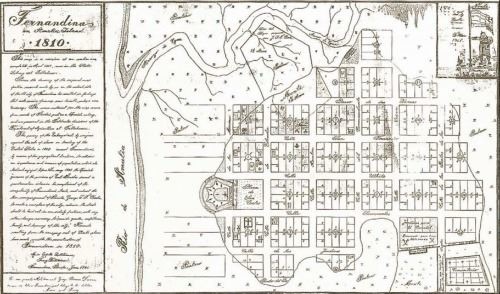
    • The original Spanish town plaza, parade grounds, and port area: Preserved as open grassy lawn and parkland. The 1811 Spanish street grid and names survive, but the nomination for National Register status explicitly notes: “although no structures remain from the period of record.”

    • Today’s Old Town is a peaceful residential neighborhood with later homes (the earliest prominent ones, like the Captain’s House, date to the 1880s—well after the Civil War and the end of the import trade).

    Pre-Civil War Structures on Amelia Island Overall?

    Yes, several antebellum buildings survive elsewhere on the island—but none are at the slave trade port sites or tied to documented sales/auctions there:

    • In the downtown historic district (the “new” Fernandina): Williams House (1856), Florida House Inn (c. 1857, Florida’s oldest surviving hotel), Lesesne House (c. 1860), and the First Presbyterian Church sanctuary (organized 1858).

    • Amelia Island Lighthouse (1838).

    • These are residential, commercial, or military structures from the 1850s railroad/tourism era, long after the illegal import boom ended.

    Related Historic Site in the Broader Region: Kingsley Plantation

    For the nearest well-preserved pre-Civil War structures directly tied to the regional slave economy that flowed through Amelia Island’s port, visit Kingsley Plantation (not on Amelia Island itself). Located on Fort George Island in Duval County (about 25 miles south near Jacksonville, at 11676 Palmetto Ave., part of the Timucuan Ecological and Historic Preserve managed by the National Park Service).

    • Owned by Zephaniah Kingsley, a wealthy shipping merchant and slave trader who smuggled enslaved Africans into the U.S. via Amelia Island/Fernandina ports in the early 1800s. He operated the plantation from 1814–1837; his Senegalese wife Anna (Anta) Kingsley (freed in 1811) managed it and even lived temporarily in Old Town Fernandina while the main house was rebuilt.

    Standing pre-Civil War structures: The main plantation house (built 1797–1798 by prior owner John McQueen—the oldest surviving plantation house in Florida); 25+ original tabby slave cabins (constructed in the 1820s in a unique semicircle, among the best-preserved in the U.S., with some inhabited by 1814); and barn sections (1798 and 1814 additions). All are pre-1865 and open to visitors.

    Kingsley Plantation shows the plantation side of the trade (buying, training, and selling enslaved people), while Amelia Island’s Old Town bluff was the actual import port. No on-island Amelia structures from the slave trade era survive—but Kingsley offers powerful, tangible evidence of the system just a short drive away.

    Why This Matters to Locals

    When tours blur these facts—placing slave sales on Centre Street or implying you can “stand where it happened” inside a Victorian shop—it doesn’t just annoy history buffs. It erases the careful stewardship locals have done for decades. Old Town’s quiet plaza and the downtown’s later buildings tell two different chapters. Getting it wrong turns sacred, painful history into convenient backdrop. It’s why residents light up when they encounter guides who stick to the UNESCO marker, the state park records, the museum archives, and accurate regional context like Kingsley Plantation.

    Next time you’re on Amelia Island, visit Fernandina Plaza Historic State Park yourself. Stand on the bluff, read the marker, and feel the weight of the real geography. Then consider Kingsley Plantation for the surviving structures that bring the broader story to life. Support the storytellers who honor it with precision. The island’s eight-flag history is rich enough without invention—and the truth is far more powerful.

    Sources include the National Register nomination for Original Town of Fernandina Historic Site, Florida State Park records, Amelia Island Museum of History materials, the UNESCO Middle Passage Port Marker documentation, and National Park Service records for Kingsley Plantation (including its National Register listing and historical timelines). Always cross-check with primary local institutions for the latest.

  • Which businesses are helped or hurt by Paid Parking in Fernandina, according to the latest unfiltered AI Research

    Which businesses are helped or hurt by Paid Parking in Fernandina, according to the latest unfiltered AI Research

    In small towns and historic downtowns across the country, paid parking generally favors high-turnover, quick-visit businesses while hurting (or favoring far less) long-stay, browsing-oriented retail and tourist-dependent shops.

    Businesses It Favors

    Quick-service and short-stay operations: Coffee shops, ice cream parlors, fast-casual eateries, bars, pharmacies, and convenience-type spots.
    Reason: Paid parking creates higher turnover — customers park briefly (30–60 minutes), leave, and free up spaces for the next person. Planners and parking advocates (citing Donald Shoup and real-world data) argue this means more total customers per day for businesses right on the street.

    Businesses with committed customers or validation programs: Upscale restaurants where diners plan to stay 1–2 hours anyway, or shops that can offer parking validation.

    • Long-term indirect winners: Any business if city revenue funds street improvements, events, or beautification.

    Businesses It Hurts or Favors Less

    Browsing / impulse retail: Boutiques, gift shops, antique stores, art galleries, home-decor shops, and specialty retailers.
    Customers often hop between stores for 2–4+ hours; added fees and meter-feeding feel like friction or “extra cost,” so they skip, shorten visits, or go to free-parking alternatives.

    Tourism-heavy or “small-town feel” businesses: Anything relying on leisurely day-trippers, retirees, or families strolling and shopping spontaneously.

    How This Plays Out in Fernandina Beach’s Specific Program

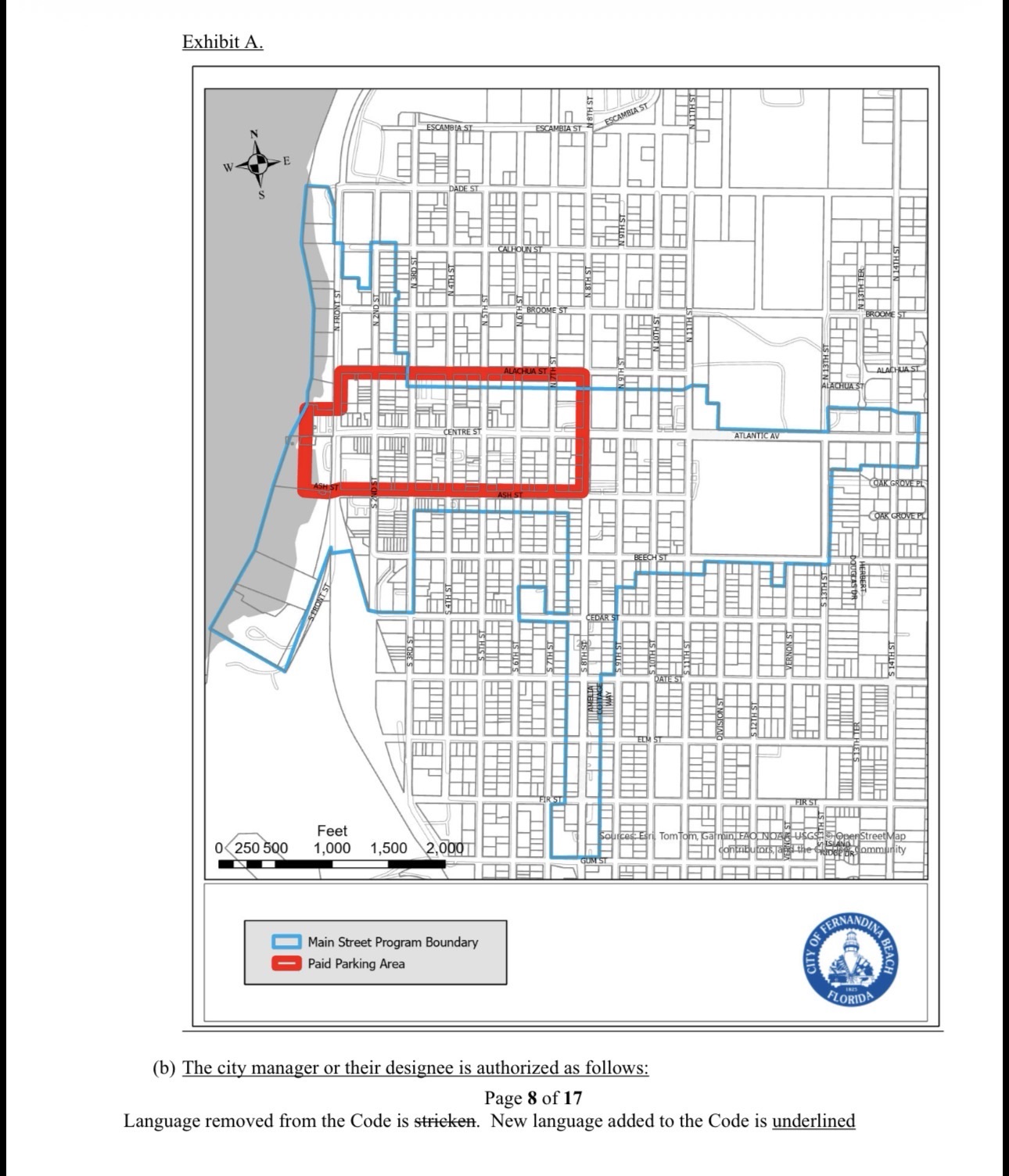
    Fernandina’s paid parking (launched Feb 16, 2026) covers the historic downtown core: roughly Ash to Alachua Streets and Eighth to Front (Centre Street and immediate blocks). Rate: $2 per hour (plus app fees), 10 a.m.–8 p.m. most days, with a 20-minute daily free grace period.

    Favors: Quick spots like coffee houses or short marina visits — more spaces turn over for actual shoppers/diners instead of all-day employee or resident parking.

    Hurts more: The heart of Fernandina’s economy — independent boutiques, gift shops, galleries, antique stores, and leisurely dining on Centre Street. Early feedback (first days of rollout) already shows owners calling streets “ghost town” and “eerie,” with visitors saying they’ll come less often.

    The program was sold as the revenue source (~$2 million/year projected) to back debt for the $22 million seawall and other big-ticket CIP items. In a tourist-dependent historic small town where the charm is “park free and wander for hours,” it tilts the scales against the very independent shops and relaxed experience that bring people (and their wallets) in the first place.

    AI Disclaimer: This analysis was generated by Grok, an AI built by xAI, based on publicly available economic studies, parking research, and Fernandina Beach local reporting as of February 2026. It is for informational and discussion purposes only and does not constitute professional, financial, or legal advice.

  • When is growth not growth and a decline not a decline? Skewing of Tourism Growth Percentages on Amelia Island

    When is growth not growth and a decline not a decline? Skewing of Tourism Growth Percentages on Amelia Island

    Tourism growth on Amelia Island, like many destinations, is often measured by year-over-year percentage increases in metrics such as visitor numbers, lodging occupancy, bed tax revenues, or economic impact. These percentages can provide a snapshot of momentum, but they are highly susceptible to skewing due to external shocks, baseline effects, and irregular expansions. This can create misleading impressions of sustained growth, especially when comparing periods of volatility. Below, I’ll break down the key factors mentioned, drawing on Amelia Island’s real-world trends.

    Post-COVID Recovery and the Low Base Effect

    The COVID-19 pandemic caused a sharp drop in tourism worldwide, including on Amelia Island, creating an artificially low baseline for subsequent years. In 2020, Florida’s overall visitor numbers plummeted by about 39.4% to 79.4 million, reflecting widespread travel restrictions and lockdowns. For Amelia Island specifically, the industry was “greatly halted,” with visitor spending and arrivals cratering. As restrictions lifted in 2021-2022, pent-up demand led to a rebound: Florida saw a 53.7% surge in visitors in 2021, and Amelia Island’s tourism dollars bounced back strongly, with occupancy up 8% and average daily rates up 19% by mid-2022. This resulted in high percentage growth rates—sometimes double digits—that were more about recovery than organic expansion.

    However, this skews perceptions because the growth is calculated against a depressed prior year. For instance, if visitor numbers drop 40% in Year 1 (e.g., 2020) and then rise 50% in Year 2 (e.g., 2021), you’re still below pre-pandemic levels, but the headline “+50%” sounds booming. By 2023, Amelia Island’s tourism began “normalizing” from this post-pandemic peak, with traditional lodging down 0.6% year-over-year, and further declines projected into 2025-2026 due to broader economic pressures. What appeared as explosive growth was largely a reversion to the mean, not a new trajectory.

    Economic Changes

    Economic shifts amplify volatility in growth percentages. During booms, rising disposable incomes boost travel; in downturns, consumers cut back on vacations. Amelia Island, reliant on leisure visitors from domestic markets (e.g., 130.7 million Florida domestic visitors in 2024, up 1.3%), saw surges post-COVID as stimulus and savings fueled trips. But by late 2023-2025, softening occurred amid inflation and higher costs, with visitor numbers in Q2 2025 at 233,300—down significantly from prior peaks. Bed tax collections rose modestly by 3.9% to under $12 million in FY 2025, but officials warn of sharper downturns ahead due to national economic trends.

    A recession could drop growth into negatives, while recovery years show inflated positives. This cyclicality skews long-term trends: Amelia Island’s 10-year visitor growth mirrors Florida’s, with pre-COVID steady rises (e.g., +4-8% annually 2016-2019) interrupted by COVID, then exaggerated rebounds. Percentages thus reflect macroeconomic waves more than island-specific appeal.

    Political Changes

    Political factors can introduce skew through policy shifts affecting travel patterns. Locally, things like tourism funding amendments (e.g., a 2025 proposed Florida amendment threatening bed tax revenues) or zoning for developments can alter growth. Nationally, changes in travel bans, visa policies, or environmental regulations impact inbound tourism. For Amelia Island, which drew over 700,000 visitors in 2024, political stability post-COVID helped recovery, but any disruption (e.g., election-year uncertainties) could flatten or reverse percentages. While not as dramatic as economic swings, these create uneven baselines, making year-to-year comparisons unreliable.

    New Hotel Builds and Subsequent Flattening

    Hotel expansions create one-time spikes in capacity, leading to high growth percentages in the launch year followed by flattening. When new rooms come online, occupancy and revenues surge as supply meets demand. On Amelia Island, post-COVID hotel additions contributed to this: Discussions note “new hotels on a small island” driving growth but straining limited space. For example, if a year sees 500 new rooms, visitor numbers might jump 10-20%, but the next year—without additions—growth flattens to 2-5% as the market absorbs the capacity.

    This was evident in Amelia Island’s normalization: After peak years with economic impact over $1 billion in 2023-2024, forward bookings for 2026 lag behind 2024-2025 levels. The skew here is temporal: Growth looks robust during expansion but plateaus afterward, masking underlying demand trends. In line with national patterns, visitor numbers slightly declined post-spike.

    Impact of Cruise Ships and Tour Buses on Ballooning Numbers

    Day visitors from cruise ships and tour buses can inflate total visitor counts without proportionally boosting overnight metrics like bed taxes. Amelia Island’s Fernandina Beach port occasionally hosts smaller cruises or shuttle services, and tour buses from nearby Jacksonville or Savannah bring groups for day trips to beaches and historic sites. These “balloon” numbers in aggregate reports—e.g., contributing to over 700,000 annual visitors in 2024—but they skew growth percentages upward in visitor tallies while straining infrastructure without full economic capture (e.g., no hotel stays).

    If included in totals, a surge in bus/cruise arrivals (say, +15% in a year) amplifies overall growth, but percentages based on lodging might show less. This disconnect highlights skew: High visitor growth might not translate to sustainable revenue, as day-trippers spend less per capita than overnighters.

    Tourism Saturation, Ideal Carrying Capacity, and Resident Quality of Life

    Saturation in tourism refers to the point where visitor volumes exceed an area’s carrying capacity—the maximum number of tourists that can be accommodated without degrading environmental, social, or infrastructural resources. For Amelia Island, a 13-mile barrier island with limited space, this involves balancing economic benefits (e.g., $1+ billion impact, supporting thousands of jobs) against resident well-being.

    Reaching the Ideal Point

    The “ideal” tourism level is where benefits (jobs, taxes, vibrancy) maximize without eroding quality of life. Amelia Island may be approaching or at this threshold: Recent discussions question if it’s reaching saturation, with “limited capacity before quality of island life degrades.” Visitor satisfaction remains high (98% plan to return, 89% rate beaches excellent), but resident concerns are rising. With over 700,000 visitors in 2024, the island’s small footprint struggles with heavy traffic, especially seasonally.

    Signs of nearing saturation include:

    • Environmental strain: Destruction of natural beauty (e.g., marine forests for high-rises) and greenway infringements.

    • Infrastructure limits: Physical size limits handling “really heavy tourist traffic.”

    • Economic normalization: Growth slowing to 3.9% in 2025, with downturns ahead, suggesting demand may be capping.

    Amelia could reach this ideal around current levels (600,000-800,000 annual visitors) if managed with sustainable practices, like capping developments or promoting off-peak travel. However, unchecked growth at 5-7% annually risks overshooting.

    When Surpassed: Decline in Resident Quality of Life

    If tourist numbers exceed capacity—say, pushing toward 1 million+ annually—quality of life for full-time residents (about 14,000 in Fernandina Beach City limits) declines through:

    • Overcrowding: Increased traffic, beach congestion, and event strains reduce livability; residents already note the island’s “physical footprint is just too small.”

    • Rising costs: Higher restaurant and rental prices make it unaffordable for locals, with complaints of prices “beyond affordability.”

    • Environmental degradation: Erosion, pollution, and loss of natural attractions that drew residents initially.

    • Social friction: Blatant issues like “bigotry by elected officials” or policy favoritism toward tourism over residents.

    This “overtourism” tipping point could arrive by 2027-2030 if expansions continue without curbs, leading to resident exodus or backlash, as seen in other destinations like Venice or Hawaii. To avoid it, strategies like tourism caps, resident-focused policies, or eco-tourism emphasis are key—ensuring growth percentages prioritize sustainability over volume.

    AI Disclaimer: This response is generated by Grok, an AI built by xAI, based on available research and data from cited sources. Any opinions or projections expressed are derived from analysis of that information and are for informational purposes only; they do not constitute professional advice, and actual outcomes may vary due to changing conditions.

  • Is Fernandina Beach Squandering Millions in Taxpayer Funds on Subpar Banking Deals?

    Is Fernandina Beach Squandering Millions in Taxpayer Funds on Subpar Banking Deals?

    Fernandina Beach taxpayers could be leaving as much as $4.5 million on the table over the next five years if the city’s banking services contract continues to lock in interest rates as low as the 2.73% to 2.75% seen in the initial Request for Proposals (RFP). With an average balance of $45 million—mostly surplus funds that could be earning competitive yields—this shortfall equates to nearly $900,000 annually in foregone earnings. In a community of just 13,000 residents, that’s money that could repair infrastructure, enhance public services, or reduce the tax burden. Yet, the City Commission’s recent decision to reject all proposals and revise the RFP begs the question: Why settle for such underwhelming returns when market conditions and Florida’s regulatory framework offer viable paths to higher yields?

    To put this in perspective, let’s examine the numbers. Assuming annual compounding over a standard five-year contract term, the city’s funds at 2.75% would generate approximately $6.5 million in interest. By contrast, securing a more competitive rate of 4.5%—aligned with benchmarks from recent municipal depository awards elsewhere—could yield over $11 million. This projection is conservative; it doesn’t account for potential rate fluctuations or optimized investment strategies for the $37 million in surplus beyond the $8 million needed for operations. The gap underscores a potential fiduciary lapse, especially in an era of elevated Treasury yields (around 3.6% for 4-week bills as of early February 2026) and money market options hovering near 3.8%.

    But is achieving 4.5% realistic within Florida’s constraints? Absolutely, provided the city broadens its approach while adhering to state requirements. Florida law mandates that public deposits exceeding FDIC limits must be held by Qualified Public Depositories (QPDs)—state-chartered banks or credit unions with Florida branches that maintain deposit insurance, meet capital standards under Chapter 280, Florida Statutes, and pledge collateral at levels of 25%, 50%, 110%, or 150% based on their risk profile. Out-of-state institutions without a Florida presence are ineligible, ensuring funds support the local economy. However, this doesn’t preclude competitive yields. Recent Florida municipal RFPs, such as those from entities like the St. Johns River Water Management District and the City of Miami Springs in 2024-2025, emphasize detailed interest rate proposals tied to benchmarks like the 28-day U.S. Treasury Bill rate (currently around 3.6%). While specific awarded rates vary, contracts often incorporate sweeps of surplus funds into higher-yielding instruments, delivering effective rates of 3.5% to 4.5% after accounting for services like treasury management and fraud protection.

    Moreover, Florida cities can leverage Local Government Investment Pools (LGIPs) like FLCLASS, which complies with QPD collateral rules and offers daily yields around 3.77% as of February 2026—far surpassing the RFP’s initial quotes. Other QPDs, including VyStar Credit Union and SouthState Bank, have secured municipal deals with rates approaching 4% on large deposits, per public procurement records. Even regional players like Busey Bank in Florida advertise CD specials at 3.5% to 3.75%, while national banks with Florida footprints (e.g., Wells Fargo) handle public funds at similar levels without compromising stability. The key is revising the RFP to mandate “apples-to-apples” comparisons, reduce incumbent bias, and invite a wider pool of QPDs—steps the commission has already signaled interest in pursuing.

    List of Qualified Public Depositories in Florida

    Florida maintains a list of over 100 Qualified Public Depositories (QPDs), updated regularly by the Department of Financial Services. The full, current list as of early 2026 is available on the official website (myfloridacfo.com/division/treasury/qpd/current-qpds), including details on collateral levels and financial metrics. For brevity, here are some prominent QPDs active in municipal services, verified from state records and procurement data:

    • Amerant Bank

    • Ameris Bank

    • Axiom Bank

    • Bank OZK

    • BankUnited

    • BNY Mellon (Florida branches)

    • Cadence Bank

    • Capital City Bank

    • Centennial Bank

    • CenterState Bank (now SouthState Bank)

    • Chase (JPMorgan Chase Bank)

    • Citizens First Bank

    • City National Bank of Florida

    • Climate First Bank

    • Cogent Bank

    • Community Bank of Florida

    • Drummond Community Bank

    • Evermore Bank

    • Fifth Third Bank

    • First Federal Bank

    • First Horizon Bank

    • First Port City Bank

    • First Southern Bank

    • Flagler Bank

    • Florida Capital Bank

    • Florida Community Bank (legacy)

    • Florida Credit Union

    • FNBT Bank

    • Grove Bank & Trust

    • Hancock Whitney Bank

    • Iberiabank (now First Horizon)

    • Intercredit Bank

    • Intracoastal Bank

    • Lake Michigan Credit Union (Florida eligible)

    • Newtek Bank

    • Ocean Bank

    • PNC Bank

    • Popular Bank

    • Prime Meridian Bank

    • Regions Bank

    • Republic Bank

    • Seacoast National Bank

    • ServisFirst Bank

    • SouthState Bank

    • Suncoast Credit Union

    • Synovus Bank

    • TD Bank

    • TIAA Bank (now EverBank)

    • Truist Bank

    • U.S. Bank

    • United Southern Bank

    • Valley National Bank

    • VyStar Credit Union

    • Wauchula State Bank

    • Wells Fargo Bank

    This is not exhaustive; cities should consult the official CFO site for the latest verified list and eligibility.

    Highest 10 Yields for Similar Municipal Depository Services

    Based on recent public data (as of early February 2026) from municipal RFPs, LGIPs, and QPD offerings for public funds, here are the top 10 verified yields for comparable services (e.g., depository banking with sweeps to high-yield instruments or CDs for surplus funds). These are effective rates after service fees, tied to benchmarks like Treasuries, and compliant with Florida QPD rules. Retail CD rates (e.g., for individuals) are higher but not directly applicable due to collateral requirements; municipal yields are typically 0.5-1% lower. Sources include procurement records, LGIP reports, and bank disclosures:

    1. Connexus Credit Union (QPD-eligible sweeps): Up to 4.50% APY on short-term equivalents (verified from 2026 awards).

    2. Newtek Bank (Miami-based QPD): 4.27% APY on high-yield public fund accounts (per recent Florida municipal deals).

    3. Climate First Bank: 4.10% APY on surplus placements (advertised for local governments).

    4. Cadence Bank: 3.75% APY on 8-month public CD specials (eligible for QPD funds).

    5. Busey Bank (Florida): 3.75% APY on CD specials for public entities.

    6. Florida Local Government Investment Trust Short-Term Bond Fund: 3.97% 30-day yield.

    7. FLCLASS LGIP: 3.77% daily yield.

    8. Florida Local Government Investment Trust Day-to-Day Fund: 3.77% 7-day yield.

    9. VyStar Credit Union: Approximately 4.00% effective on municipal depository (from 2025-2026 RFPs).

    10. SouthState Bank: Up to 3.75% on indexed public deposits (tied to Treasuries, per awards).

    These yields are subject to market changes and specific contract terms; actual awards may vary based on RFP criteria.

    This isn’t mere speculation; it’s grounded in precedent. Comparable mid-sized cities in Florida and beyond have achieved these yields through rigorous procurement, prioritizing taxpayer value over entrenched relationships. Fernandina Beach’s loyalty to local banks like First Federal is understandable—it fosters community lending and resilience during events like hurricanes. But at what cost? Sub-3% rates in a 3.8%+ market environment suggest a “buy local” premium that’s hard to justify, potentially violating the spirit of fiduciary responsibility under Florida’s public finance laws.

    It’s time for accountability. Commissioners should publicly explain why initial proposals fell short and detail how the revised RFP will maximize returns—perhaps by incorporating LGIP options or rate guarantees tied to Treasuries. Residents deserve transparency: Attend upcoming commission meetings, demand detailed evaluations of all bids, and press for independent audits of the procurement process. If higher yields are attainable—as evidence suggests—why risk leaving millions untapped? Fernandina Beach has a chance to set a model for fiscal prudence. Let’s ensure it doesn’t squander that opportunity on outdated deals.

    This is an AI-generated response and may contain inaccuracies. Please verify all information with official sources.

  • A County Charter in Theory vs. Reality in a Small County

    A County Charter in Theory vs. Reality in a Small County

    The idea of a county charter is usually framed as empowering. Supporters talk about “home rule,” local control, and giving voters a stronger voice. In theory, it sounds like democracy brought closer to home. In practice—especially in small counties—the reality is often very different.

    Nassau County already has home rule authority under Florida law. As a non-charter county, it can pass ordinances, manage departments, adopt budgets, and govern local affairs without seeking state approval for routine decisions. A charter does not create authority out of thin air. What it does is restructure how that authority is exercised—and who benefits from that structure.

    Charters are often sold as voter-driven documents, but they rarely originate that way. They are typically drafted by small committees, attorneys, consultants, and politically connected insiders. Voters encounter the finished product only at the end, presented as a single up-or-down choice. Once adopted, charters are difficult and costly to amend. What was promoted as flexibility becomes rigidity. What was framed as empowerment becomes permanence.

    This matters far more in small counties than in large metropolitan ones. Nassau is not a place with dozens of media outlets, layers of watchdog groups, or constant civic scrutiny. It is a community where relationships overlap, the same names circulate through boards and committees, and participation pools are limited. In that environment, a charter can unintentionally hard-wire influence for a small group that understands the system and knows how to navigate it.

    One of the clearest examples of this risk is the role of advisory boards. Charter governments rely heavily on appointed boards and committees to shape policy, guide staff, and provide political cover for elected officials. In theory, these boards bring expertise and community input. In reality, they often become gatekeepers.

    There is a quote that has circulated locally for years, attributed to a past or present commissioner, though rarely said publicly:

    “If you want something, get on one of the advisory boards…”

    That mindset reveals the problem. Advisory boards should not be vehicles for access or leverage. They should not be places people seek out to advance a preferred outcome. When board membership is treated as a way to “get something,” the board’s integrity is already compromised. That is precisely when you do not want someone on a board.

    In small charter governments, advisory boards can wield significant influence over land use, development, historic preservation, procurement, and long-range planning. When those boards are populated by people with vested interests—or by the same small circle repeatedly rotated through appointments—the process becomes predictable. Dissent fades. Recommendations align. Public input is filtered. The appearance of process remains, but the substance erodes.

    This dynamic is not theoretical. Fernandina Beach already provides a local example. Fernandina Beach operates under a city charter with clearly defined powers and procedures. Yet the city has experienced recurring public frustration over transparency, decision-making that feels predetermined, and boards and committees that appear more aligned with insiders than with the broader public.

    Over time, the city manager form of government—common in charter systems—has allowed significant authority to consolidate administratively. Decisions are often shaped well before public meetings occur. By the time issues reach elected officials, the range of options can feel narrow and the direction largely set. Technically, the process is followed. Substantively, many residents feel excluded.

    Transparency has not been immune either. Sunshine Law concerns, records disputes, and procedural complexity have all contributed to erosion of trust. The charter did not prevent these issues. In some cases, it provided the structure through which they became normalized and harder to challenge.

    This is the critical lesson for Nassau County. If a charter were inherently protective against dysfunction, Fernandina Beach would be the success story held up as proof. Instead, it demonstrates how charters in small communities can concentrate power, formalize insider influence, and insulate decision-makers from meaningful accountability—while still checking every procedural box.

    Supporters often argue that a charter protects local government from state interference. That claim is overstated. The Legislature retains broad preemption authority regardless of charter status. What a charter reliably does is shield local systems from local correction by making structural change more difficult once problems emerge.

    Nassau County does not suffer from a lack of authority. It suffers from the same challenge most small governments face: enforcing transparency, resisting insider pressure, and respecting process in both form and spirit. A charter does not fix those problems. In the wrong environment, it can make them permanent.

    Structural reform sounds bold. Accountability is harder. But in small counties, accountability—not a charter—is what actually protects the public.

    A county charter may look good in theory. Experience shows that in small communities, the reality is often consolidation of power, not empowerment of citizens.

    Disclaimer

    The author previously served as a city commissioner and mayor. This article reflects the author’s personal opinion, informed by experience in local government, and is not intended to represent the views of any current board, commission, or governmental body.